
Safaricom Slashes Data Prices by Up to 35% Effective Dec 1 Amid Regulatory Pressure and Airtel Competition
 Nov, 30 2025
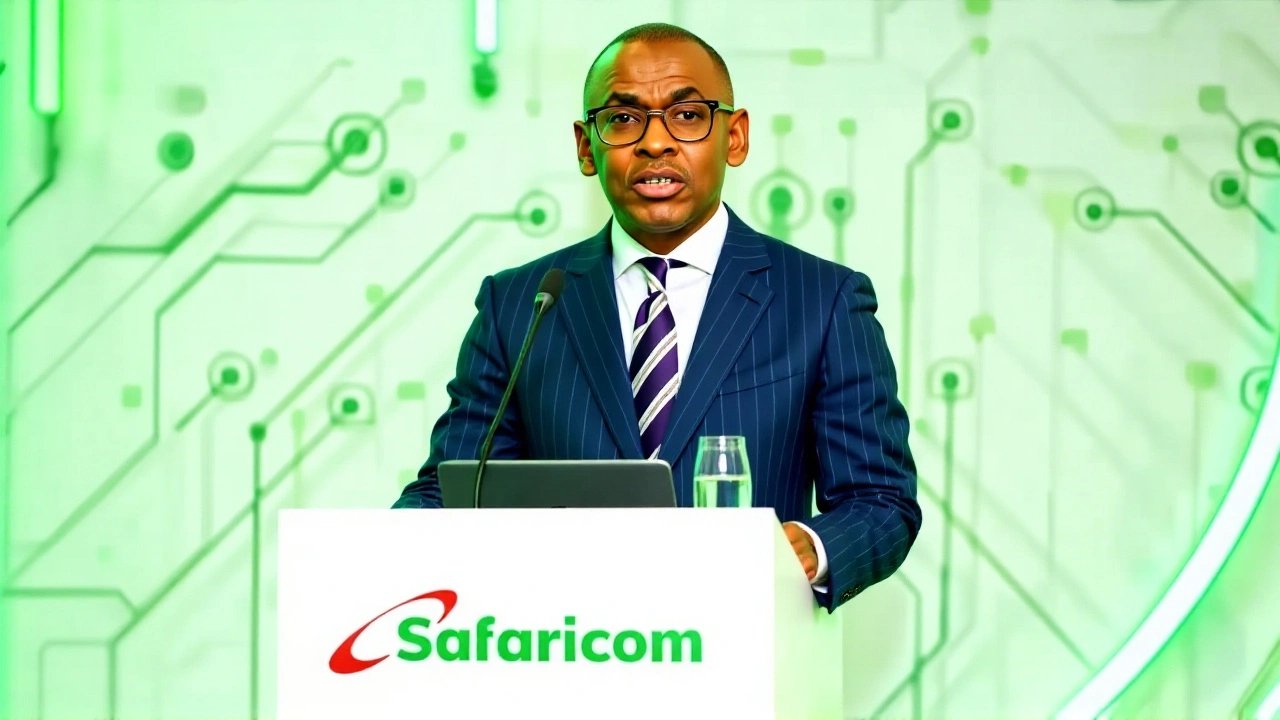
On Saturday, December 1, 2025, at 00:01 East Africa Time, Safaricom PLC dropped data bundle prices across Kenya by as much as 35%—a move that instantly reshaped the country’s digital economy. The cuts, announced just three days earlier by CEO Peter Ndegwa at the company’s Innovation Hub in Nairobi’s Upper Hill, respond to a direct order from the Communications Authority of Kenya and mounting pressure from rival Airtel Kenya. For millions of Kenyans who rely on mobile data for everything from schoolwork to small business transactions, this isn’t just a price change—it’s a lifeline.
What Changed—and By How Much?
The details, laid out by Sylvia Mulinge, CEO of Safaricom’s Consumer Business, were precise: a 1GB daily bundle fell from KES 120 to KES 78; the 5GB weekly plan dropped from KES 500 to KES 360; and the popular 20GB monthly bundle slid from KES 2,000 to KES 1,560—all before the 16% VAT. That’s a 35% drop on daily plans, 28% on weekly, and 22% on monthly. For a heavy user, the monthly savings average KES 1,250 ($9.60), according to Ndegwa. It’s not just a discount—it’s a reset.
These aren’t arbitrary numbers. They’re a direct reaction to the Communications Authority of Kenya’s November 5, 2025 Market Study Report, which found Kenyans were paying 37.2% more for data than the East African Community average. Safaricom’s pre-reduction rate? KES 10.50 per 100MB. The regional norm? KES 7.65. That gap had been widening since 2018, even as fiber optic infrastructure slashed operational costs by 40%.
Regulatory Pressure and Shareholder Approval
The Communications Authority of Kenya didn’t just ask for lower prices—it mandated a 20% reduction in wholesale data rates on October 15, 2025. Safaricom, which holds roughly 65% of Kenya’s mobile market and serves 44.2 million customers, had no choice but to comply. But there was more: shareholders gave their blessing. At an Extraordinary General Meeting on November 25, 2025, at Sarit Centre Auditorium in Nairobi, 98.7% of the 1,245 voting shareholders approved the price cuts. That’s rare unanimity in corporate governance.
And yet, investors reacted with concern. Safaricom’s share price on the Nairobi Securities Exchange fell 3.2% on November 28, closing at KES 28.45. Why? Because data revenue made up 63.8% of Safaricom’s total service income in Q3 2025—KES 32.17 billion ($247.1 million). Genghis Capital Limited estimates the annual revenue hit could reach KES 18.7 billion ($143.6 million). But the company expects that loss to be offset by a 12% surge in data subscribers, pushing the user base to 38.1 million.
Airtel Matches—And the Market Shifts
By 3:00 PM EAT on November 30, 2025, Airtel Kenya CEO Adil Farooq announced identical price reductions. No delay. No negotiation. Just a mirror image. That’s the new reality: Safaricom can’t lead on price without triggering a chain reaction. The competition isn’t just about market share anymore—it’s about survival.
For consumers, this is a win. Infotrak Research Limited’s survey of 1,200 users in Nairobi, Mombasa, and Kisumu showed 78% approval. But the ripple effects go deeper. Prepaid users—8.3 million of them—now have more breathing room. Rural customers, who often rely on mobile data as their only internet access, will see improved affordability. And small businesses, from barbershops to e-commerce vendors, can now afford to stay online longer.
What’s Next? 5G, Monitoring, and the Long Game
Safaricom isn’t done. On February 14, 2026, it plans to launch 5G services in Nairobi and Mombasa—with initial coverage limited to 125 base stations. That’s ambitious, but risky. The company needs to recoup costs somehow. Meanwhile, the Communications Authority of Kenya will enforce compliance through mandatory monthly pricing reports starting January 5, 2026. Miss a report? Face a penalty of 0.5% of monthly data revenue. That’s a serious deterrent.
Professor Bitange Ndemo, former Permanent Secretary for Communications and now a professor at Strathmore University, put it bluntly in a November 29 interview: "This is long overdue. Kenyans have been overpaying since 2018, when infrastructure costs dropped by 40%. The profit margins were never justified." He’s not alone. The 2019 #DataMustFall campaign, which gathered 247,000 signatures on Change.org, foreshadowed this moment. Back then, Safaricom cut prices by 20%. Now, it’s cutting again—harder.
Why This Matters Beyond Kenya
This isn’t just a Kenyan story. It’s a blueprint for emerging markets where telecom monopolies have long kept prices high under the guise of infrastructure investment. When regulators step in, when competitors dare to match, and when consumers finally have a voice—change happens. Safaricom’s move could pressure MTN, Vodacom, and other regional giants to follow suit across East and Southern Africa.
The real test? Will these lower prices last? Or will they be quietly rolled back once Airtel’s market share stabilizes? Only time—and the monthly reports—will tell.
Frequently Asked Questions
How does this affect prepaid users in rural Kenya?
Approximately 8.3 million prepaid data users—many in rural counties like Turkana, Mandera, and Kilifi—will benefit most, as mobile data is often their only affordable internet link. The 35% drop on daily bundles means users can now access 1GB for under KES 80, enabling longer access to health information, agricultural advice, and mobile money services without needing to top up as frequently.
Why did Safaricom’s stock drop despite the consumer win?
Investors reacted to the projected KES 18.7 billion ($143.6 million) annual revenue loss from data sales, which accounted for 63.8% of Safaricom’s total service income in Q3 2025. While subscriber growth is expected to offset some losses, the short-term hit to profitability triggered a 3.2% share price decline on November 28, reflecting market skepticism about near-term earnings.
What’s the role of the Communications Authority of Kenya in enforcing this?
The authority now requires Safaricom and Airtel Kenya to submit detailed monthly pricing reports by the 5th business day of each month, starting January 5, 2026. Non-compliance carries a penalty of 0.5% of monthly data revenue per violation—making it financially risky to backtrack. This is the strongest enforcement mechanism Kenya has ever implemented on telecom pricing.
Will fiber broadband prices change too?
No. Safaricom’s fiber-to-the-home broadband services remain under separate regulation by the Communications Authority of Kenya and were not included in this price cut. Their pricing is still governed by cost-of-service models, not mobile data benchmarks. Customers using home internet won’t see immediate changes, but regulatory scrutiny on fixed-line pricing is expected to increase in 2026.
How does this compare to past price reductions?
In June 2022, Safaricom cut prices by 15% after regulatory pressure. In 2019, following the #DataMustFall campaign, it reduced rates by 20%. This December 2025 reduction—up to 35%—is the largest and most comprehensive in the company’s history, reflecting both intensified regulatory action and unprecedented competitive pressure from Airtel Kenya.
What’s the long-term impact on Kenya’s digital economy?
Lower data costs could accelerate digital adoption across education, fintech, and e-commerce. With 44.2 million mobile users now paying less, more people may shift from cash to digital payments, join online marketplaces, or access remote learning. Analysts predict a 15–20% increase in mobile data consumption within six months, potentially boosting GDP growth by 0.3–0.5% in 2026 through increased digital productivity.
Richard Berry
December 1, 2025 AT 08:09DJ Paterson
December 3, 2025 AT 03:16Stuart Sandman
December 4, 2025 AT 13:21Pete Thompson
December 5, 2025 AT 02:03Sandy Everett
December 6, 2025 AT 17:49And props to the regulators-finally, someone’s holding power accountable.
Shikhar Narwal
December 8, 2025 AT 13:37Ravish Sharma
December 8, 2025 AT 17:29jay mehta
December 9, 2025 AT 15:12Amit Rana
December 11, 2025 AT 10:41J Mavrikos
December 11, 2025 AT 20:36Rajendra Gomtiwal
December 12, 2025 AT 16:51