
US 250th Anniversary: Polarization, Heatwaves and Public Ambivalence
 Jul, 5 2026
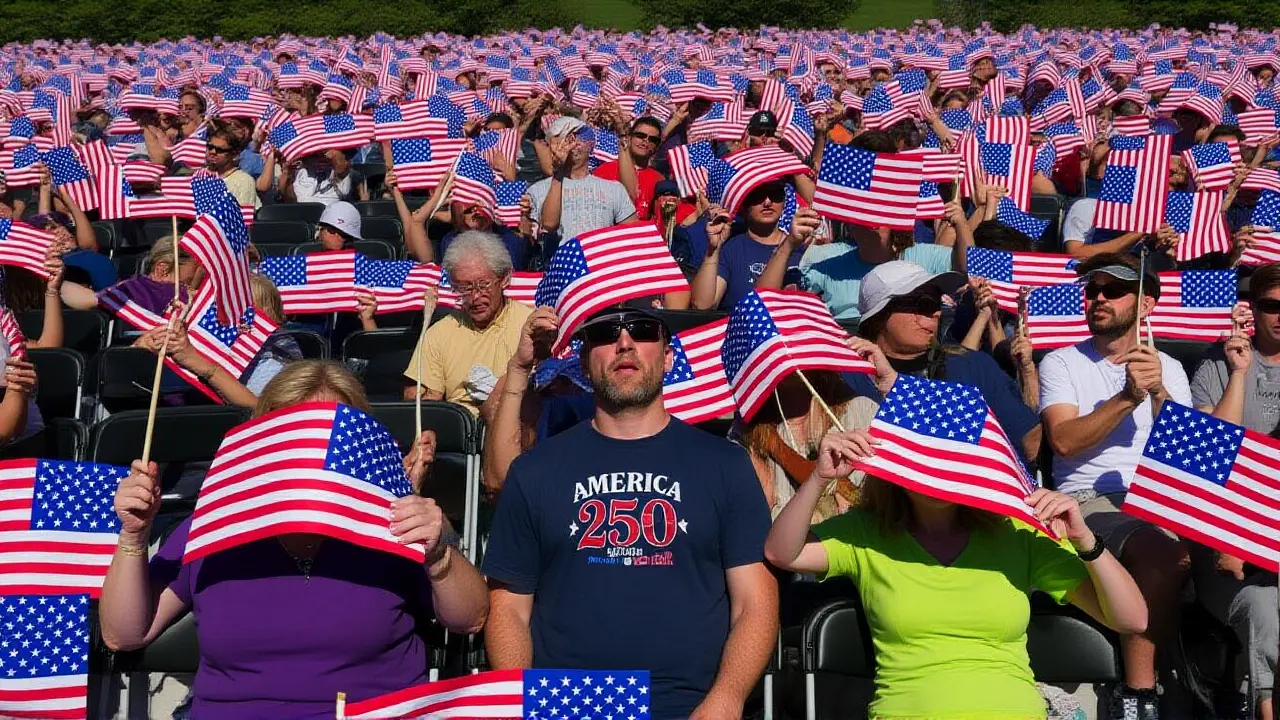
On Saturday, July 4, 2026, the United States turned 250. But instead of a unified national party, the United States Semiquincentennial was defined by political friction, sweltering heat, and a public that seemed more skeptical than celebratory. While President Donald J. Trump framed the day as a triumphant validation of his administration’s agenda, critics argued the milestone had been hijacked for partisan gain.
The celebrations stretched from Washington, D.C. to Philadelphia, but the mood was complicated. A severe heatwave forced the cancellation of parades in the capital and Philadelphia, while polling data revealed that nearly half of Americans couldn’t even identify what the holiday commemorated. It wasn't just about the weather; it was about a nation struggling to find common ground on its own founding story.
A Tale of Two Celebrations
Here’s the thing: there were essentially two competing visions for America’s birthday. On one side, you had America250, the bipartisan commission created by Congress nearly a decade ago to coordinate reflections and local events. They focused on community gatherings, historical education, and a nationwide “Day of Reflection” scheduled for July 5.
On the other side, President Trump launched Freedom 250 via executive order in January 2025. This initiative, led by his allies, prioritized large-scale spectacles like the “Great American State Fair” on the National Mall and a Grand Prix race around the White House grounds. The Washington Post described this as a “competing effort” that disrupted the original bipartisan plans, shifting funds and focus toward presidential branding rather than historical reflection.
Task Force 250, chaired by Trump himself, mandated federal agencies to plan an “extraordinary celebration.” But the result? A fragmented landscape where Democrats accused the President of turning Independence Day into a rally, while Trump’s team dismissed those claims as “partisan smears.”
The Public Mood: Skepticism Over Pride
Turns out, not everyone was feeling patriotic. Survey data painted a sobering picture. According to Pew Research Center, nearly 70 percent of Americans expressed dissatisfaction with the state of the nation. Gallup polling found that only about half of respondents felt “extremely proud” or “very proud” to be American—a 25-year low.
Even worse, civic knowledge appears to be eroding. A Cato Institute poll revealed that 46 percent of Americans didn’t know what July 4 commemorates. Among Generation Z, that number jumped to 61 percent. When asked if the Founding Fathers would be disappointed with today’s America, over three-quarters said yes. Senator Jeff Merkley of Oregon tried to cut through the noise, posting on Facebook that he started his morning by rereading the Declaration of Independence, urging citizens to recommit to the vision of “Life, Liberty and the pursuit of Happiness.”
Heatwaves and Cancellations
If the politics weren’t enough, nature stepped in. A ferocious heatwave hit much of the country on July 4, 2026. Conditions got so dangerous that the “Great American State Fair” had to close to the public during the afternoon. Parades in Washington, D.C., and Philadelphia were canceled due to fire risks and health concerns. Fireworks shows across the nation faced similar disruptions.
NPR reporter Brian Mann noted that despite the chaos, some festivities continued. The Boston Pops performed in Massachusetts, and Seattle hosted a major fireworks display. But for many, the day was spent indoors, avoiding the sun rather than celebrating history. It was a stark reminder that even planned national moments can be derailed by climate realities.
Cultural Highlights Amidst the Noise
Despite the polarization, cultural events still drew crowds. In Los Angeles, Los Angeles Memorial Coliseum hosted “America’s Block Party,” featuring Queen Latifah, Chris Stapleton, and The Smashing Pumpkins. Tickets were priced at $17.76—a nod to 1776—and proceeds benefited the Giving 4th charity.
In Virginia, PBS broadcast “America Made in Virginia: 250 Years Together” live from Colonial Williamsburg, featuring Judy Collins and Ken Burns. Meanwhile, museums reported record visits. The Museum of the American Revolution in Philadelphia saw a 17 percent increase in June visitation compared to the previous year. At Mount Vernon, tickets for July 4 sold out by May.
Yet, these events felt scattered. Unlike the cohesive bicentennial of 1976, which dominated national attention for months, the 250th anniversary felt disjointed. As Quaker pastor Philip Gulley told CNN, he felt “no desire to celebrate,” arguing that the current divisions overshadowed any shared history.
Looking Ahead: What’s Next?
The official semiquincentennial programming runs through December 31, 2026. Key upcoming events include the burial of a time capsule in Philadelphia, set to open in 2276 for the nation’s 500th anniversary. Sail250 tall ships will continue visiting ports along the Atlantic coast, and state-level festivals will persist into summer.
But the deeper question remains: How does a divided nation move forward? With 56 percent of Americans fearing the U.S. could cease to be a free nation within 50 years, the next quarter-millennium looks uncertain. The 250th birthday wasn’t just a party; it was a mirror reflecting a country at odds with itself.
Frequently Asked Questions
What is the difference between America250 and Freedom 250?
America250 is the bipartisan congressional commission established nearly a decade ago to coordinate educational and community-focused commemorations. Freedom 250 is a separate initiative launched by President Trump’s allies in 2025, focusing on large-scale spectacles and presidential branding, which critics argue politicized the anniversary.
Why were many parades and events canceled on July 4, 2026?
A severe heatwave struck much of the United States on July 4, 2026, creating dangerous conditions. This forced the cancellation of parades in Washington, D.C., and Philadelphia, as well as the temporary closure of the Great American State Fair on the National Mall due to health and fire risks.
How do Americans feel about their country’s future according to recent polls?
Polling data reveals significant ambivalence. Nearly 70 percent of Americans are dissatisfied with the state of the nation, and 56 percent fear the U.S. could cease to be a free nation within 50 years. Additionally, 46 percent of respondents did not know what July 4 commemorates, highlighting a gap in civic knowledge.
What major cultural events took place during the 250th anniversary?
Key events included “America’s Block Party” at the Los Angeles Memorial Coliseum featuring Queen Latifah and Chris Stapleton, a PBS special from Colonial Williamsburg with Ken Burns, and the burial of a time capsule in Philadelphia. Museums like the Museum of the American Revolution also reported record visitation numbers.
When will the semiquincentennial celebrations officially end?
The official White House Task Force 250 and related federal programming are scheduled to terminate on December 31, 2026. However, some state-level events and museum exhibitions may continue into early 2027, and the time capsule buried in Philadelphia is set to open in 2276.
Sanjay Kumar
July 7, 2026 AT 04:50It is fascinating to observe how the concept of national identity fractures under the weight of modern political polarization. The juxtaposition of 'America250' and 'Freedom 250' serves as a microcosm for the broader societal divide, where shared history is increasingly viewed through partisan lenses rather than collective memory. One must wonder if the erosion of civic knowledge, particularly among Generation Z, signals a fundamental shift in how younger generations engage with their nation's founding principles. Perhaps this ambivalence is not merely apathy, but a critical re-evaluation of what those principles mean in a contemporary context.
Gaurav Jangid
July 9, 2026 AT 00:51Oh my gosh!!! Can you believe the sheer audacity of turning a birthday into a political rally?!? It’s like watching a train wreck in slow motion!! The heatwave was just nature saying 'get out of here'!! So dramatic!!
Ghanshyam Gohel
July 9, 2026 AT 09:57The situation is quite alarming indeed! The cancellation of events due to extreme weather highlights the urgent need for climate adaptation strategies. Furthermore, the political maneuvering surrounding the anniversary demonstrates a troubling trend of prioritizing spectacle over substance. We must address these issues with seriousness and resolve!
Nathan Lemon
July 9, 2026 AT 20:41From an international perspective, it appears that the United States is grappling with significant internal contradictions. The bifurcation of commemorative efforts reflects deeper ideological rifts within the populace. While cultural events such as those in Los Angeles and Virginia provided moments of unity, they seem insufficient to bridge the widening gap between competing narratives of American identity.
Abhijit Pawar
July 10, 2026 AT 23:44Stop making excuses. The leadership failed to unite the country. Simple as that.
lavanya tolati
July 11, 2026 AT 10:21i feel sad reading about how divided everyone is. the heatwave made it worse because people couldn't even come together outside. it seems like we are losing the ability to celebrate our shared humanity instead of focusing on who is right or wrong. maybe we should focus more on local community building rather than big national spectacles that only create more noise
srinivasan sridharan
July 12, 2026 AT 00:08One might argue that the skepticism displayed by the public is actually a healthy sign of democratic engagement. After all, blind patriotism is rarely productive. However, the lack of basic civic knowledge is concerning. It suggests that the educational system has failed to instill a foundational understanding of history. This is not optimism, but a realistic assessment of the challenges ahead.
Anant Kamat
July 13, 2026 AT 17:05honestly just glad i wasn't there to deal with the heat. sounds like a nightmare. the whole thing feels pretty disjointed from what i read. not sure why everyone is so worked up about two different committees though. let people have their fun i guess
Indrani Dhar
July 14, 2026 AT 20:25obviously the heatwave was engineered to suppress turnout for the opposing party's events. don't take the bait on the 'bipartisan' commission nonsense. it's all a distraction from the real agenda. the polls are rigged too of course. wake up sheeple. the truth is hidden in plain sight but no one wants to see it because it's too uncomfortable. typical control tactic
Raja Meena
July 16, 2026 AT 01:02It is disheartening to see the decline in moral clarity. The Founding Fathers would be appalled by the current state of affairs. We have lost our way by prioritizing individual desires over collective responsibility. The lack of reverence for historical milestones indicates a spiritual void in society. We must return to traditional values if we hope to restore any semblance of order.
Pooja Kiran
July 16, 2026 AT 05:36The semantic distinction between 'America250' and 'Freedom 250' is negligible in practical terms yet highly significant in branding strategy. The cognitive dissonance exhibited by the electorate is a classic case of motivated reasoning. Furthermore, the statistical insignificance of the Gen Z polling data when aggregated nationally renders the alarmism somewhat hyperbolic. It is merely a reflection of generational cohort effects rather than a systemic failure of civic education. The narrative construction is flawed.