
UK Announces Major Climate Projects in Solomon Islands Ahead of COP30
 Dec, 1 2025
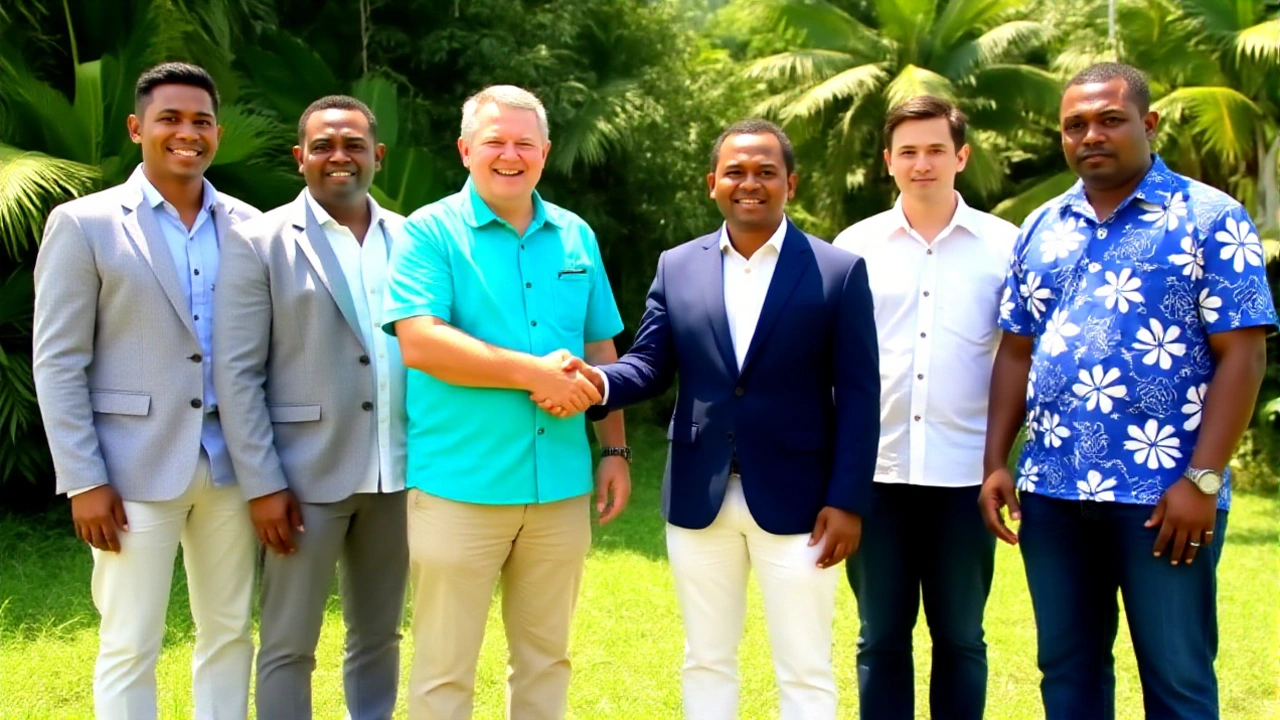
When Paul Turner, the British High Commissioner to Solomon Islands and Nauru, stood before senior officials in Honiara on November 11, 2025, he didn’t offer platitudes. He offered a choice: manage your forests, minerals, and energy well — or watch your future wash away. The setting was the British High Commission (BHC) in Honiara, a quiet diplomatic outpost on Guadalcanal Island that’s suddenly become a nerve center for Pacific climate strategy. With COP30 looming in Brazil next November, the UK is betting big that Solomon Islands’ next five years will shape how small island nations survive the climate crisis.
At the Crossroads of Survival
Turner’s message was blunt: sea levels are rising, but that’s not the only threat. "Solomons is at the crossroads," he said. And while you can’t stop the ocean, you can stop corrupt logging deals, opaque mining contracts, and diesel-powered electricity that costs more than anywhere else on Earth. The country’s 90% diesel dependency isn’t just an environmental problem — it’s an economic anchor. Households pay triple the regional average for power. Small businesses shutter. Schools struggle to run fans in the heat. The numbers don’t lie: Solomon Islands has the most expensive power in the world.Forests, Not Just Trees
The UK isn’t just sending consultants. It’s deploying full forestry teams — ecologists, legal experts, data analysts — to work directly with communities in Malaita Province and Guadalcanal Province. These aren’t pilot programs. They’re blueprints. The goal? Draft a new legislative framework that gives forest rangers real teeth: GPS tracking for timber, digital permits, community oversight boards. Local leaders have long complained that logging companies operate like ghosts — arriving, cutting, vanishing, leaving nothing but erosion and broken trust. Now, they’ll have legal backing to hold them accountable.Powering the Future, One Solar Panel at a Time
In the energy sector, the most radical shift is the creation of an Independent Energy Regulator. Right now, Solomon Power holds a monopoly. No competition. No innovation. Just diesel generators humming in the background of every town. The UK’s plan is to break that stranglehold. By enabling Independent Power Providers — especially solar startups — the regulator will open the market. Imagine a village in Choiseul installing rooftop panels, selling excess power back to the grid. That’s not science fiction. It’s the next phase. Turner admitted the transition won’t be quick. "We’ve started the process," he said. "But it will take time and will need patience."From Logging to Mining: The New Threat
As forests shrink, mining moves in. Turner didn’t sugarcoat it: "It is well-known that logging companies are now transitioning to mining as forestry declines." That’s not just an industry shift — it’s an ecological emergency. Open-pit mines scar landscapes. Heavy metals poison rivers. And without transparency, contracts are signed in back rooms. That’s why the UK is cheering the Solomon Islands government’s decision to re-join the Extractives Industries Transparency Initiative (EITI). UK lawyers are already embedded in the Ministry of Mines and Energy, drafting new laws to force companies to disclose payments, environmental impact assessments, and community agreements. This isn’t about stopping mining. It’s about making sure the country gets its fair share — and its people aren’t left with poisoned water and broken promises.Why This Matters Beyond the Pacific
Solomon Islands may have just 700,000 people, but it’s a microcosm of the Global South’s climate dilemma. It produces almost no emissions, yet suffers the worst impacts. Its survival depends on external support — but not charity. It needs tools, training, and legal muscle. The UK’s approach is different from traditional aid. No handouts. No strings attached to loans. Instead, it’s investing in institutions. In systems. In people who can say no to bad deals. That’s why this matters far beyond Honiara. If this model works here, it could be replicated in Vanuatu, Fiji, or even parts of West Africa.What Comes Next?
There are no hard deadlines. Turner avoided them on purpose. "We’re not here to rush," he said. But the clock is ticking. COP30 isn’t just a conference — it’s a global spotlight. Solomon Islands will be expected to show progress. The UK will likely unveil progress reports at the summit. Meanwhile, communities in Malaita are already preparing for forest patrols. Solar technicians are being trained in Honiara. And for the first time, citizens might actually see who’s paying for what in their own backyards. The real test? Will these reforms outlast the next election? Will the next government keep the lawyers in place? That’s the question no one’s asking out loud — but everyone’s watching.Background: A Nation on the Frontline
The Solomon Islands — a chain of six major islands and over 900 smaller ones in Melanesia — has been a climate canary for decades. Rising seas have already forced entire villages to relocate. Coral bleaching has wiped out fishing grounds. Yet the country’s energy grid remains stuck in the 1980s. With only 10% of electricity from renewables, and diesel imports costing millions annually, the economic toll is crushing. The British High Commission in Honiara, established in 1978, has quietly grown into one of the UK’s most strategic Pacific missions — covering not just Solomon Islands, but also Nauru, another tiny nation facing existential climate threats.Frequently Asked Questions
How will these projects affect everyday people in Solomon Islands?
For rural communities, the changes mean cleaner water, more reliable electricity, and real income from sustainable forestry. Solar power could cut household energy bills by up to 40% in the long term. Forest rangers trained by UK teams will now have legal authority to fine illegal loggers — a direct boost to local enforcement. The Independent Energy Regulator will also create new jobs in renewable tech, from solar installers to grid analysts.
Why is the UK investing so heavily in Solomon Islands?
The UK sees Solomon Islands as a critical test case for climate resilience in the Pacific. With China expanding influence in the region, the UK is countering with technical cooperation rather than debt-based aid. Success here proves that transparent governance and renewable energy can stabilize small states — making them less vulnerable to geopolitical pressure. It’s also a chance to showcase UK expertise in environmental law and energy reform.
What’s the timeline for these projects?
There’s no fixed end date, but initial forestry systems are expected to be operational in Malaita and Guadalcanal by mid-2026. The Independent Energy Regulator should be legally established by late 2026, with first IPPs connected by 2027. The EITI reforms will be fully implemented by 2028, with annual audits beginning in 2029. Turner emphasized multi-year timelines — this isn’t a quick fix, but a generational shift.
How does this relate to COP30 in Brazil?
COP30 will spotlight nations leading in climate adaptation, not just emissions cuts. Solomon Islands, with UK backing, aims to present a model of resource governance that other small islands can replicate. The UK plans to showcase these projects as a "Pacific Climate Governance Blueprint" — turning local reforms into global policy examples. Success here could earn Solomon Islands direct funding from the UN’s Loss and Damage Fund.
What happens if the next government changes direction?
The UK is building institutional memory, not political alliances. The new forestry laws, energy regulator, and EITI compliance are designed to be legally binding, not dependent on political will. Training programs for civil servants ensure continuity. Even if leadership changes, the systems remain. That’s the real innovation: making reform self-sustaining, not personality-driven.
Are there risks to this approach?
Yes. Over-reliance on foreign experts could weaken local capacity if not carefully managed. There’s also the risk of "greenwashing" — where projects look good on paper but fail on the ground. Past aid efforts in the Pacific have faltered due to poor coordination. The UK is trying to avoid this by embedding staff within ministries and involving communities from day one. But monitoring will be crucial — and the world will be watching.
Yogesh Popere
December 1, 2025 AT 05:04This is just Britain playing hero again. They show up with their fancy reports and legal teams, but who’s really in charge here? The Solomons don’t need more foreign consultants telling them how to run their own land. It’s colonialism with solar panels.
Manoj Rao
December 2, 2025 AT 23:13Let’s not ignore the elephant in the room: if the UK is so invested in transparency, why aren’t they auditing their own fossil fuel investments in the Pacific? This isn’t altruism - it’s geopolitical chess. China’s offering infrastructure; Britain’s offering paperwork. One feeds the people, the other feeds the spreadsheets.
And don’t get me started on ‘independent regulators’ - those are just bureaucratic ghosts until the local politicians get bored and stop caring. History repeats, but with better PowerPoint.
Alok Kumar Sharma
December 4, 2025 AT 19:34They’re wasting time. The ocean’s rising. People are leaving islands. No amount of legal frameworks fixes that. Solar panels won’t stop a tsunami. This is theater.
Tanya Bhargav
December 5, 2025 AT 15:11I really hope this works. I’ve read about villages in Malaita that have lost their entire coastline. If this helps even one family keep their home, it’s worth it. I just wish more countries would step up like this - not with aid, but with real partnership.
Sanket Sonar
December 6, 2025 AT 12:27The institutionalization angle is actually smart. Most climate aid fails because it’s project-based, not system-based. If the EITI framework and energy regulator become embedded in civil service DNA, that’s the real win. The rest is noise.
pravin s
December 7, 2025 AT 23:14It’s a start. Not perfect, but better than doing nothing. I’m curious how the local youth are responding. Are they being trained? Or just observed?
Bharat Mewada
December 8, 2025 AT 11:48There’s a quiet dignity in this approach. No grand speeches, no debt traps. Just lawyers, rangers, and solar techs showing up every day. Maybe the future isn’t in big treaties - it’s in small, stubborn acts of accountability.
Ambika Dhal
December 10, 2025 AT 01:21Of course they’re pushing EITI. The UK knows mining companies will pay bribes to get permits. But why now? Because China’s signing deals in the shadows. This isn’t about the Solomons - it’s about winning a PR war in the Pacific. Don’t be fooled.
Vaneet Goyal
December 11, 2025 AT 19:10Legal frameworks mean nothing without enforcement. Who’s going to stop a logging truck at 2 a.m. with no backup? Who’s going to pay the ranger’s salary when the next government cuts the budget? This plan is elegant on paper - but on the ground? It’ll collapse.
Amita Sinha
December 12, 2025 AT 07:10Ugh. Another white savior complex. They come in with their ‘blueprints’ like we’re all just waiting for a British miracle. Meanwhile, local women have been running community solar projects for years - no UK help needed. Why not fund THEM instead of their consultants?
Also - solar panels on roofs? In a cyclone zone? LOL. Good luck.
Bhavesh Makwana
December 13, 2025 AT 12:57This is the kind of thing that gives me hope. Not because it’s perfect, but because it’s trying. Real change doesn’t come from speeches - it comes from training rangers, hiring local solar techs, and giving communities the tools to say no. That’s power. And it’s contagious.
If this works, imagine what could happen in Papua New Guinea, or Vanuatu, or even the Maldives. This isn’t just about climate - it’s about dignity.
Vidushi Wahal
December 14, 2025 AT 15:43I wonder how many of the forest rangers are women. In many villages, women are the ones who know the land best - where the streams run, where the trees grow. If they’re not leading the patrols, this whole thing is missing half the story.
Narinder K
December 14, 2025 AT 19:02So the UK is now the climate police of the Pacific? Funny. They left the region in the 1970s and now they’re back with a PowerPoint and a clipboard. What’s next - a British-style tea break during forest patrols?
Narayana Murthy Dasara
December 16, 2025 AT 01:16I’ve seen similar efforts in rural India - foreign teams come in, set up systems, then leave. The magic happens when locals take ownership. If these rangers and solar installers start seeing themselves as the solution - not the recipients - then this actually has a shot.
Maybe the real win isn’t the regulator. It’s when a 17-year-old in Choiseul says, ‘I’m going to fix the grid,’ and actually believes it.
lakshmi shyam
December 17, 2025 AT 21:04Everyone’s acting like this is groundbreaking. It’s not. It’s just another aid project with fancy words. The Solomons need money, not lawyers. And why is the UK the one deciding what ‘transparency’ looks like? Who gave them that authority?
Sabir Malik
December 19, 2025 AT 12:14Let me tell you something - I’ve worked with rural communities in Odisha, and I know how this goes. The first year is all excitement. The second year, the foreign staff leave. The third year, the paperwork gets lost. The fourth year, the diesel generators come back on because no one remembers how to fix the solar inverter.
But here’s the thing: if they’re embedding people in ministries, training locals, and making it legally binding - that’s different. That’s not charity. That’s legacy. And I’ve seen too many projects fail because they were temporary. This? This might actually last. I’m cautiously hopeful.
Debsmita Santra
December 20, 2025 AT 02:57The institutional memory component is critical - most climate interventions collapse because they’re tied to political cycles. But if the EITI compliance and energy regulator are written into civil service law, not ministerial decree, then even a corrupt successor can’t easily undo it. That’s the quiet genius here. It’s not flashy, but it’s durable. And durability is what small island nations need most.
Also, the fact that they’re working with communities from day one - not just consulting them - changes everything. You can’t design systems for people if you don’t understand how they live. This feels grounded. Not perfect, but grounded.
Vasudha Kamra
December 20, 2025 AT 09:23This is exactly the kind of support the Global South needs - not loans, not aid packages, but capacity. Training, legal tools, transparency. The Solomons didn’t cause this crisis, but they’re paying the price. Helping them build systems to protect themselves isn’t charity - it’s justice.
Abhinav Rawat
December 21, 2025 AT 08:39There’s a deeper layer here that no one’s talking about: the psychological shift. For decades, Pacific Islanders have been told they’re victims - helpless, passive, waiting for rescue. But this model flips that. It says: you are the guardians of your land. You have the right to say no. You have the power to enforce contracts. That’s not just policy - it’s identity restoration.
When a village elder stands in front of a logging truck with GPS-tracked timber data in hand, and says, ‘You’re not taking this,’ that’s not climate action - that’s sovereignty. And that’s what will outlast every solar panel, every law, every COP summit.